Day 2 was a profound deep-dive into the “Global Soul” of the Ukrainian diaspora. Today, the 𝐖𝐢𝐧𝐭𝐞𝐫 𝐒𝐜𝐡𝐨𝐨𝐥 𝟐𝟎𝟐𝟔 moved from theoretical frameworks to the living, breathing life trajectories of those who carried Ukraine in their hearts across continents.
𝐌𝐎𝐑𝐍𝐈𝐍𝐆: 𝐓𝐇𝐄 𝐄𝐂𝐇𝐎𝐄𝐒 𝐎𝐅 𝐋𝐈𝐅𝐄 𝐓𝐑𝐀𝐉𝐄𝐂𝐓𝐎𝐑𝐈𝐄𝐒
The day opened with a moving session titled “𝐆𝐨𝐢𝐧𝐠 𝐆𝐥𝐨𝐛𝐚𝐥: 𝐋𝐢𝐟𝐞 𝐓𝐫𝐚𝐣𝐞𝐜𝐭𝐨𝐫𝐢𝐞𝐬 𝐨𝐟 𝐔𝐤𝐫𝐚𝐢𝐧𝐢𝐚𝐧 𝐃𝐏𝐬”. 𝐒𝐚𝐫𝐚𝐡 𝐆𝐫𝐚𝐧𝐝𝐤𝐞 (Heidelberg University) and 𝐀𝐥𝐢𝐧𝐚 𝐙𝐡𝐞𝐥𝐧𝐨𝐯𝐚𝐜𝐡 (V. N. Karazin Kharkiv National University) guided us through the intricate paths of Displaced Persons. These aren’t just statistics; they are stories of resilience, of families rebuilding from ashes, and of an intellectual identity that refused to be extinguished by distance.
𝐀𝐅𝐓𝐄𝐑𝐍𝐎𝐎𝐍: 𝐖𝐀𝐋𝐊𝐈𝐍𝐆 𝐓𝐇𝐑𝐎𝐔𝐆𝐇 𝐇𝐈𝐒𝐓𝐎𝐑𝐘
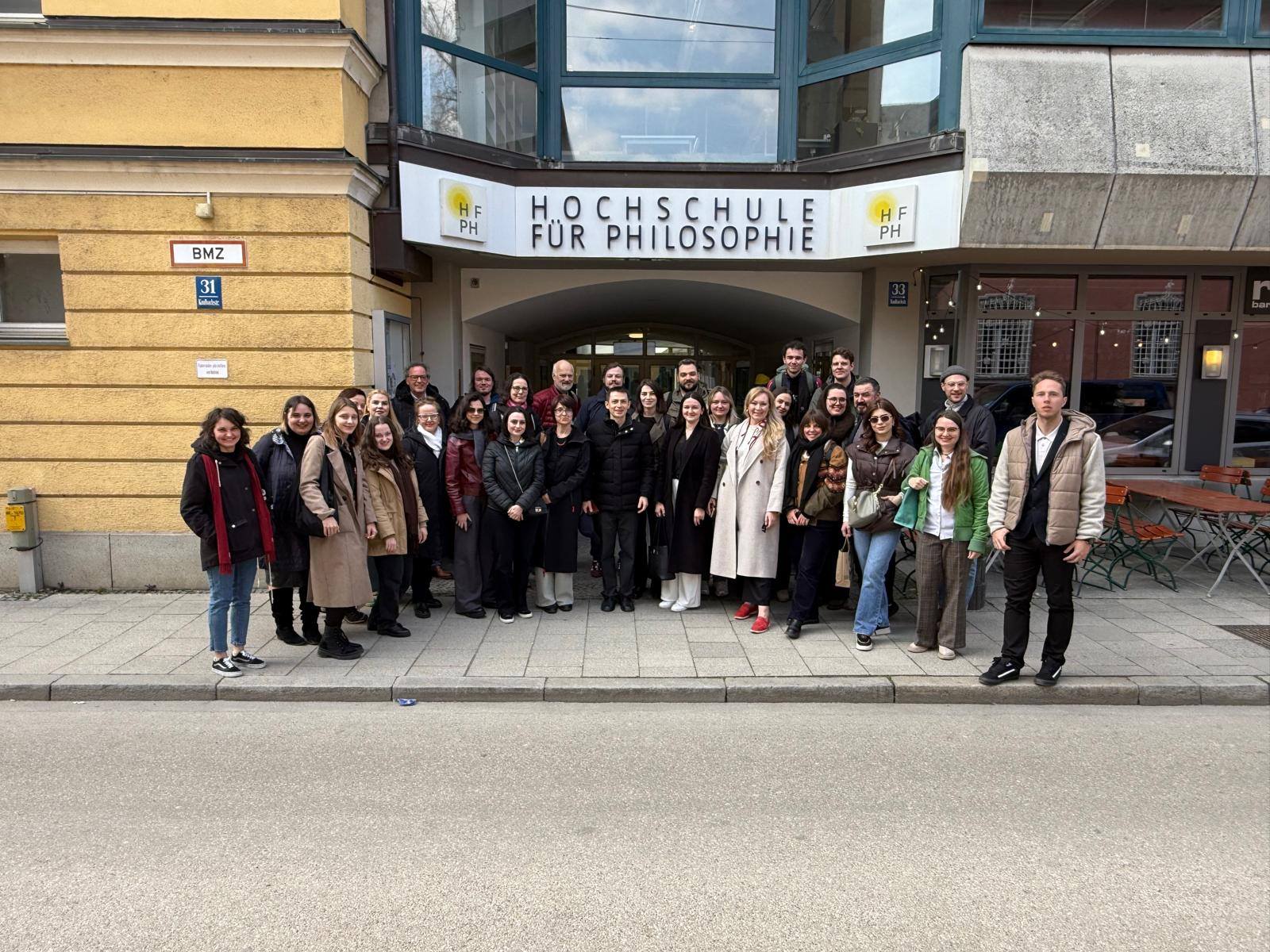
Between the heavy academic sessions, we took to the streets of Munich. 𝐏𝐞𝐭𝐞𝐫 𝐇𝐢𝐥𝐤𝐞𝐬 led an immersive 𝐖𝐚𝐥𝐤𝐢𝐧𝐠 𝐓𝐨𝐮𝐫: 𝐔𝐤𝐫𝐚𝐢𝐧𝐢𝐚𝐧 𝐌𝐮𝐧𝐢𝐜𝐡 𝐚𝐟𝐭𝐞𝐫 𝟏𝟗𝟒𝟓. Walking past the very buildings where the Ukrainian Free University (UFU) and other institutions found their second life, we felt the tangible weight of our presence in this city. Munich isn’t just a host; it is a chapter of our national survival.
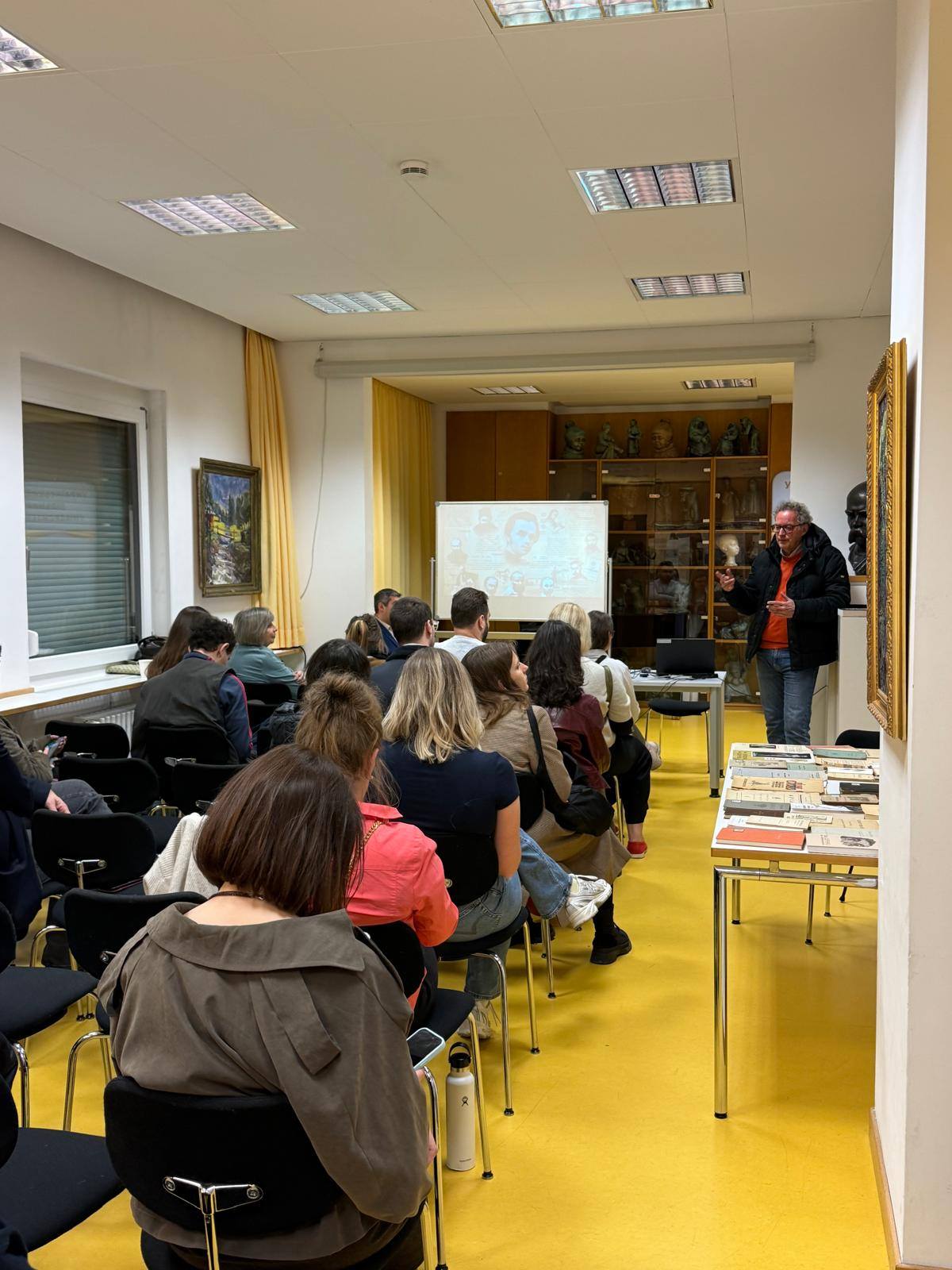
A particularly touching moment occurred when Peter Hilkes led the group of students to our own UFU building. Rector Professor Larysa Didkovska was there to personally and warmly welcome the guests. To be greeted by the Rector in our own building underscored the sense of home and continuity that UFU provides for the Ukrainian academic community, even decades after its settlement in Munich.
𝐓𝐇𝐄 𝐋𝐀𝐓𝐈𝐍 𝐀𝐌𝐄𝐑𝐈𝐂𝐀𝐍 𝐏𝐀𝐍𝐄𝐋: 𝐓𝐇𝐄 “𝐇𝐈𝐃𝐃𝐄𝐍” 𝐃𝐈𝐀𝐒𝐏𝐎𝐑𝐀
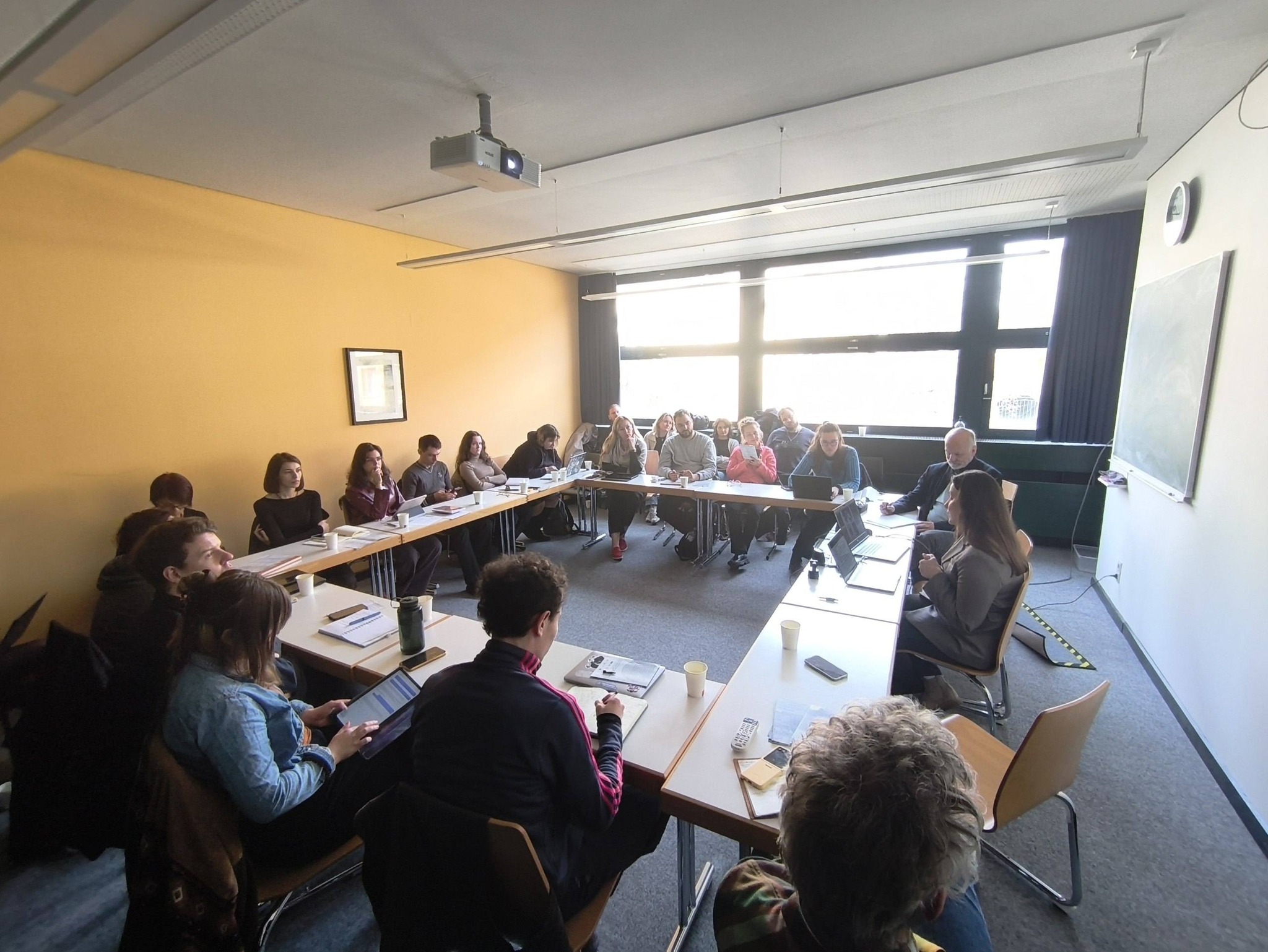
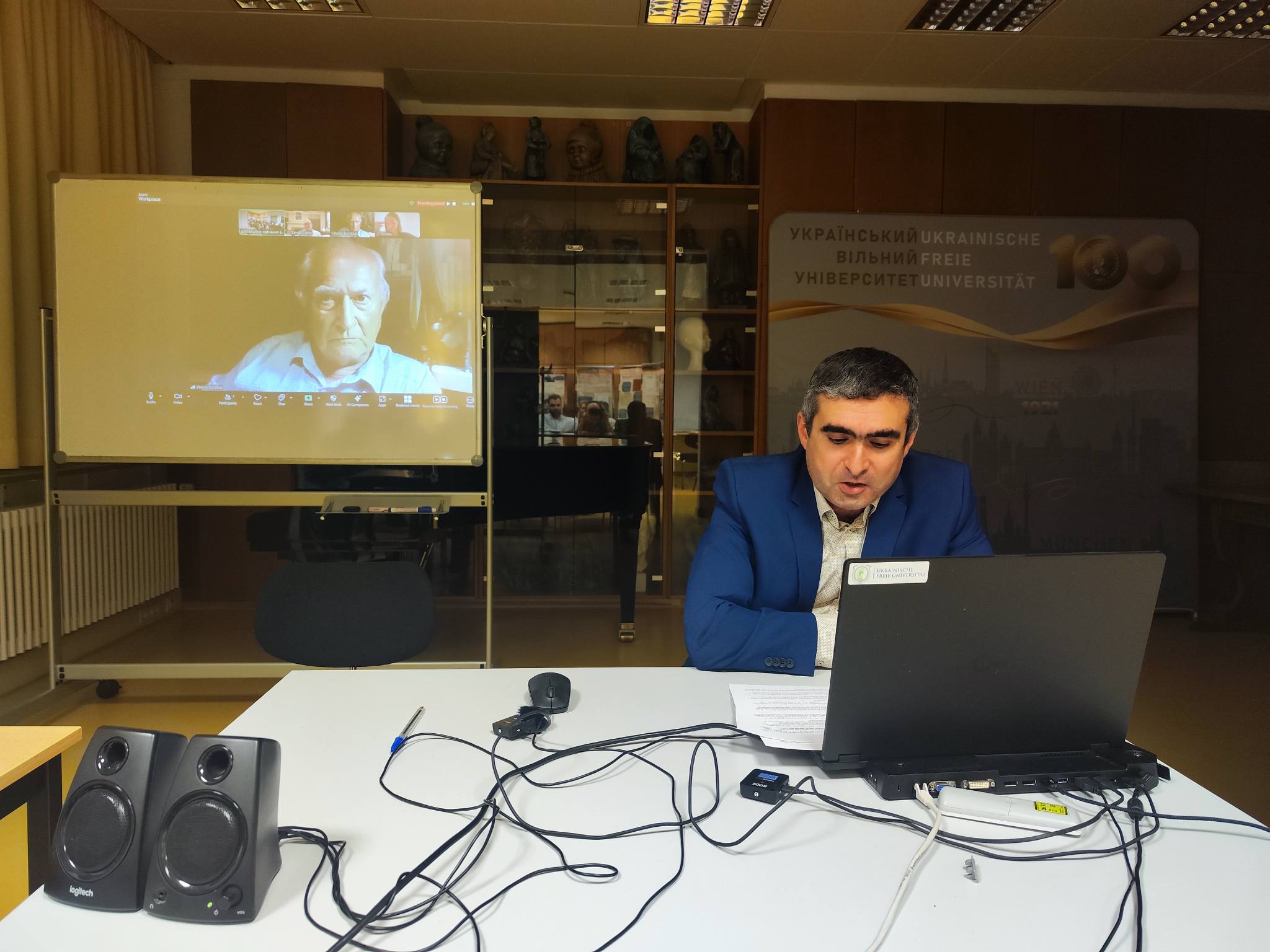
The centerpiece of the afternoon was a gripping panel on 𝐔𝐤𝐫𝐚𝐢𝐧𝐢𝐚𝐧 𝐌𝐢𝐠𝐫𝐚𝐭𝐢𝐨𝐧 𝐭𝐨 𝐋𝐚𝐭𝐢𝐧 𝐀𝐦𝐞𝐫𝐢𝐜𝐚, chaired by Chancellor of UFU Dmytro Shevchenko. This session felt like uncovering a hidden Atlantis.
 𝐓𝐡𝐞 𝐑𝐨𝐨𝐭𝐬 𝐨𝐟 “𝐁𝐫𝐚𝐳𝐢𝐥𝐢𝐚𝐧 𝐅𝐞𝐯𝐞𝐫”: Vitorio Sorotiuk (Ukrainian-Brazilian Central Representation) took us back to the late 19th century, explaining how the “pioneer spirit” was forged in the rural expanses of Paraná. He highlighted the shift from the first waves of agricultural “fever” to today’s resilient, urbanized community that just last year saw the opening of the 𝐔𝐤𝐫𝐚𝐢𝐧𝐢𝐚𝐧 𝐅𝐫𝐞𝐞 𝐔𝐧𝐢𝐯𝐞𝐫𝐬𝐢𝐭𝐲 𝐢𝐧 𝐁𝐫𝐚𝐳𝐢𝐥.𝐓𝐡𝐞 “𝐈𝐬𝐥𝐚𝐧𝐝𝐬” 𝐨𝐟 𝐈𝐝𝐞𝐧𝐭𝐢𝐭𝐲: 𝐒𝐞𝐫𝐠𝐞 𝐂𝐢𝐩𝐤𝐨 (University of Alberta) expanded our horizon to Paraguay, Uruguay, and beyond. He revealed a unique “Southern path” of identity – where descendants speak Spanish, Guarani, and Ukrainian – creating a structural stability that differs from the North American experience.𝐂𝐨𝐥𝐨𝐦𝐛𝐢𝐚 & 𝐓𝐡𝐞 𝐍𝐚𝐫𝐫𝐚𝐭𝐢𝐯𝐞 𝐖𝐚𝐫: 𝐊𝐫𝐢𝐬𝐭𝐢𝐧 𝐖𝐞𝐬𝐞𝐦𝐚𝐧𝐧 (KAS Colombia) provided a sobering look at the current narrative in the Andean region. In a vacuum where Russian disinformation often thrives, she highlighted the urgent need for “truth-telling.” Ukraine and Colombia are natural partners – both are resource-rich, both are shaped by conflict, and both are fighting to define their sovereignty under pressure.
𝐄𝐕𝐄𝐍𝐈𝐍𝐆: 𝐋𝐈𝐓𝐄𝐑𝐀𝐓𝐔𝐑𝐄 𝐀𝐓 𝐖𝐀𝐑
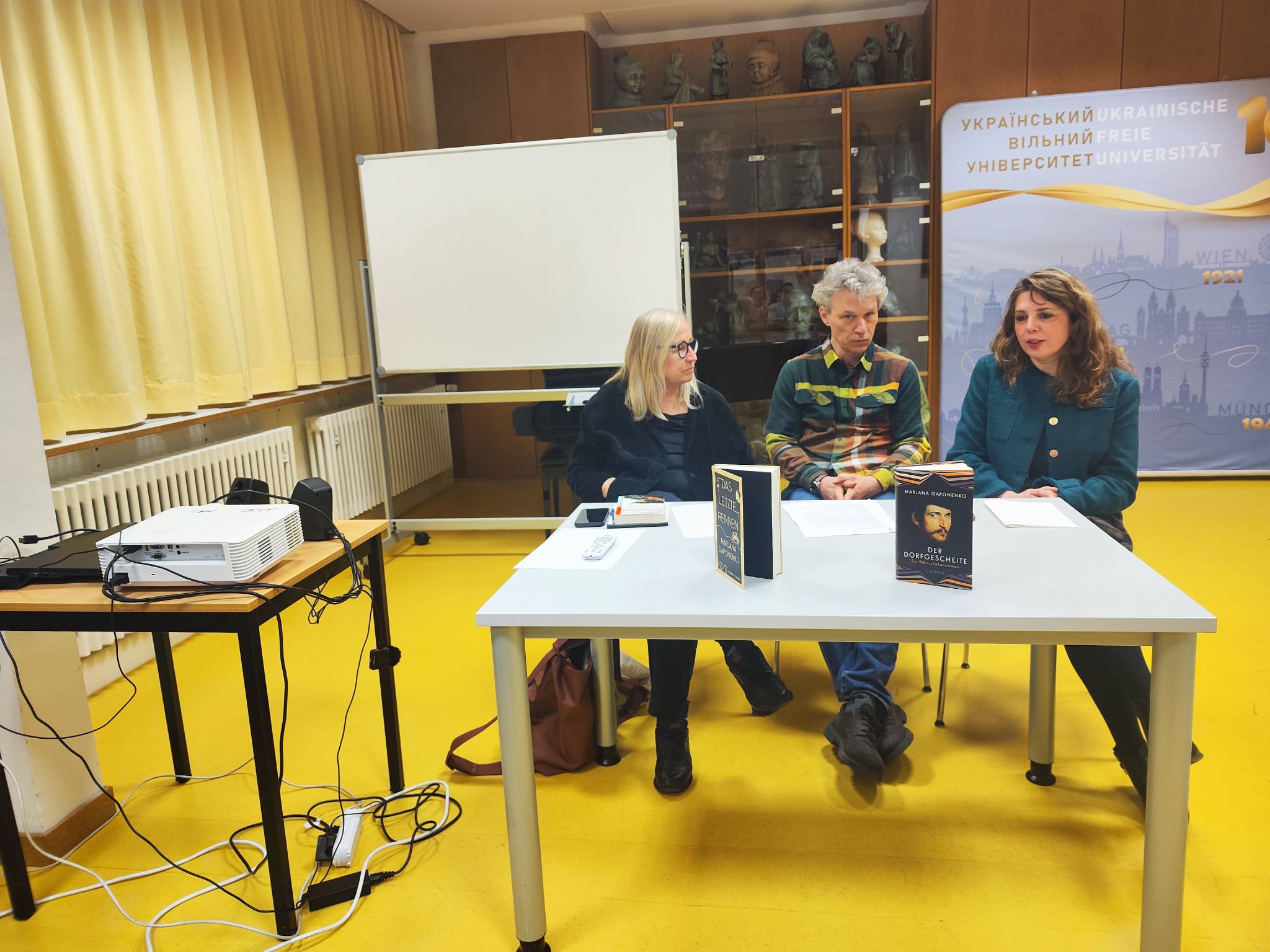
We concluded the day with a soulful Round Table (in German) on “𝐋𝐢𝐭𝐞𝐫𝐚𝐭𝐮𝐫𝐞 𝐚𝐭 𝐖𝐚𝐫 𝐚𝐧𝐝 𝐌𝐢𝐠𝐫𝐚𝐭𝐢𝐨𝐧”. Featuring writer 𝐌𝐚𝐫𝐣𝐚𝐧𝐚 𝐆𝐚𝐩𝐨𝐧𝐞𝐧𝐤𝐨 and literary critic Alexander Kratochvil, the discussion explored how trauma and displacement are transcribed into art.
The conversation was expertly moderated by Verena Nolte (Kulturallmende gUG, Munich), who skillfully bridged the gap between the historical context of migration and the visceral reality of contemporary literature in a time of war. As we discussed the power of the written word, it became clear: while borders may shift, the Ukrainian narrative remains an unbreakable thread.
“𝑾𝒆 𝒔𝒕𝒖𝒅𝒚 𝒎𝒊𝒈𝒓𝒂𝒕𝒊𝒐𝒏 𝒏𝒐𝒕 𝒐𝒏𝒍𝒚 𝒕𝒐 𝒍𝒐𝒐𝒌 𝒃𝒂𝒄𝒌𝒘𝒂𝒓𝒅 𝒂𝒕 𝒘𝒉𝒆𝒓𝒆 𝒘𝒆 𝒉𝒂𝒗𝒆 𝒃𝒆𝒆𝒏, 𝒃𝒖𝒕 𝒕𝒐 𝒏𝒂𝒗𝒊𝒈𝒂𝒕𝒆 𝒕𝒉𝒆 𝒑𝒂𝒕𝒉 𝒕𝒐𝒘𝒂𝒓𝒅 𝒘𝒉𝒆𝒓𝒆 𝒘𝒆 𝒂𝒓𝒆 𝒈𝒐𝒊𝒏𝒈: 𝒂 𝒇𝒓𝒆𝒆, 𝑬𝒖𝒓𝒐𝒑𝒆𝒂𝒏 𝑼𝒌𝒓𝒂𝒊𝒏𝒆.”
Text by Dr. Liliia Bondarenko